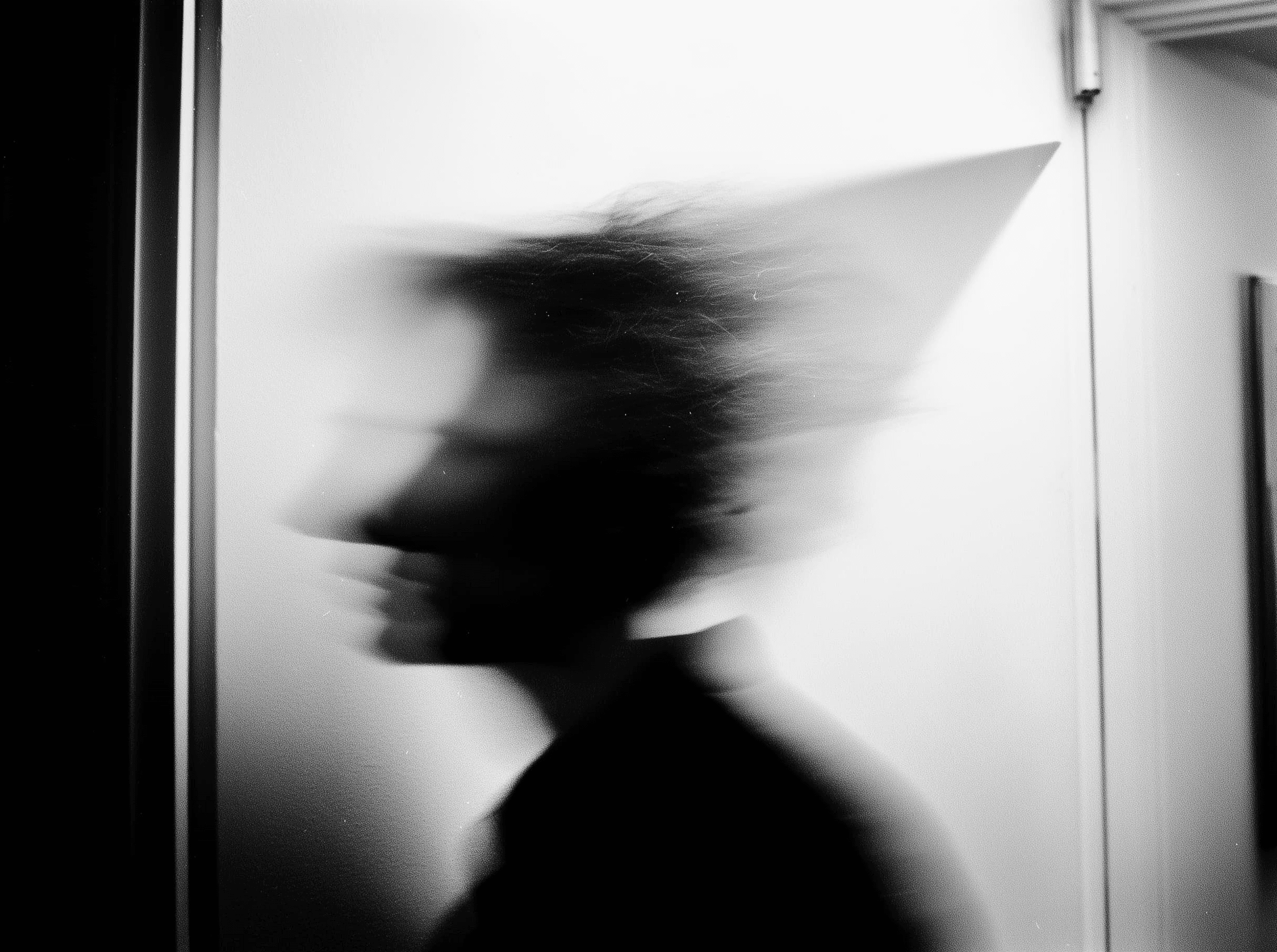
Light is often reduced to a technical tool. But in its simplest form, it becomes something more instinctive — something that shapes how a subject is felt.
Natural light as a quiet direction
Light is often treated as something to control.
But in its simplest form, it does something else.
It shapes presence.
It defines how a subject is felt without adding anything artificial.
Simplicity as intention
Without complex setups, the image relies on very little.
A face. A direction. A source of light.
This removes distraction and shifts the focus to what remains — expression, movement, and subtle changes in tone.
Movement within stillness
Even in controlled environments, nothing is completely still.
A slight movement. A shift in posture. A change in breathing.
These small variations bring the image to life.
Motion blur, even minimal, reinforces this — the image is not frozen, but ongoing.
Light as emotion
Light reveals, but it also shapes perception.
It creates softness, distance, or tension depending on how it falls.
A shadow can hide as much as it shows.
Imperfection as balance
Perfect clarity often removes depth.
Grain, softness, and slight imbalance add texture and presence.
They make the image feel natural — closer to how a moment is experienced.
Conclusion
Natural light does not impose.
It reveals.
And sometimes, the strongest image is the one that does the least — allowing the subject to exist without interruption.

Clara Hayes
Portrait Photographer